The Lost Art of Santa Fe's Adobe Architecture
Reviewed against our editorial policy and sources.

How ancient Pueblo building techniques shaped the Southwest's most distinctive city.
From our reporting
Strolling through Santa Fe in 2024, the scent of piñon smoke and the sight of adobe walls sculpted by centuries of sun instantly transport you to another era.
Key Takeaways
- Santa Fe’s distinctive adobe architecture is a direct continuation of ancestral Pueblo building traditions.
- The use of earthen materials like adobe provides natural insulation, keeping interiors cool in summer and warm in winter.
- Preservation efforts, like the city’s Historic Design Review Board, ensure Santa Fe’s architectural heritage remains intact.
- Modern adobe construction often incorporates contemporary techniques while maintaining traditional aesthetics.
- Visitors can explore historic adobe structures at sites like the Palace of the Governors and throughout the city’s historic districts.
Imagine stepping into a timeless landscape, where the very earth rises to meet you in forms both ancient and inviting. This is Santa Fe, a city whose identity is inextricably bound to the elemental beauty of adobe, a building material that whispers tales of centuries past.
From the earth beneath your feet, to the sky above, adobe offers more than just shelter; it offers a profound connection to the sun-drenched, rugged terrain of the American Southwest, echoing the spirit of those who first sculpted its clay into homes and villages.
The Ancient Roots of Adobe
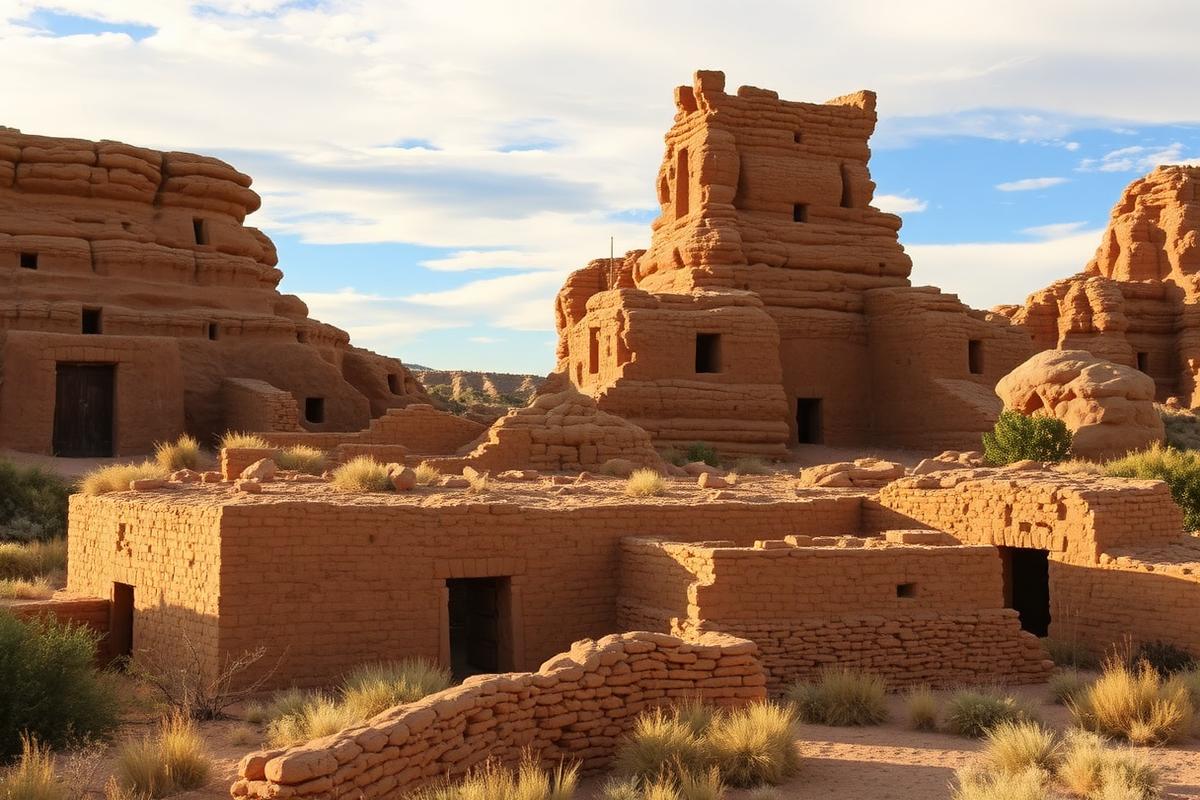
Before European settlers ever laid eyes on the high desert of New Mexico, indigenous Pueblo peoples were master builders of adobe structures. For over a millennium, communities like the Taos Pueblo, a UNESCO World Heritage site just north of Santa Fe, have continuously inhabited multi-story adobe complexes, demonstrating an unparalleled understanding of their environment. This wasn't merely construction; it was a deep, intuitive science – a way of life interwoven with the very soil.
The word "adobe" itself, derived from the Arabic "at-tub" (the brick), arrived in the Americas via Spanish conquistadors. However, the technique was already perfected here. Pueblo builders mixed clay, sand, water, and organic materials like straw or grass, shaping them into sun-dried bricks. These bricks, often laid with a mud mortar, stood as testament to their ingenuity, providing natural insulation against the intense summer sun and the desert's surprising winter chill. Their collective efforts created communal dwellings that fostered both resilience and kinship.
When the Spanish arrived in the early 17th century, they adapted these time-honored methods to construct their own churches, missions, and government buildings, including the Palace of the Governors in Santa Fe. This fusion of building traditions gave birth to the distinctive "Pueblo-Spanish" style, which would eventually define the city's architectural character. It’s a remarkable story of cultural exchange, where practical wisdom triumphed over imported notions of architecture.
An Architectural Mandate: Preserving the Pueblo Style
By the late 19th and early 20th centuries, as the railroads brought new materials and styles to the Southwest, Santa Fe faced a challenge. Modern construction threatened to erase its unique architectural heritage. Visionaries, artists, and preservationists recognized the imminent loss and championed a movement to protect and revive the city's authentic character. This wasn't just about aesthetics; it was about retaining the very soul of Santa Fe.
In 1912, the new state capital formally embraced the "Pueblo-Spanish" or "Santa Fe Style" for its public buildings. By the 1920s, a city ordinance mandated that all new construction and significant renovations in the historic core adhere to this style. This wasn't merely a suggestion; it was law, ensuring that the visual integrity of Santa Fe would endure. This foresight is why as you wander the streets of the historic downtown, nearly every building, from the humblest casita to the grandest museum, echoes the same earth-toned beauty.
This architectural mandate required builders to emulate adobe construction, even if using modern materials like concrete blocks or wood frames underneath a stucco finish. The key was the aesthetic: flat roofs (with drainage systems, of course), rounded corners, deep-set windows, portal (porch) entries supported by carved wooden vigas (ceiling beams) and corbels. This commitment to a unified visual identity is unparalleled in American urban planning, creating an extraordinarily cohesive and visually striking environment that feels both ancient and eternally welcoming.
The Sensory Experience of Adobe
To truly appreciate Santa Fe's adobe architecture, you must engage all your senses. Run your hand along a sun-warmed adobe wall; you'll feel the gentle, irregular texture of the mud and straw, a tactile connection to the earth itself. The thick walls breathe, absorbing heat during the day and slowly releasing it at night, creating a natural climate control system that is both energy-efficient and deeply comforting.
Step inside an adobe building, and you'll immediately notice the profound sense of peace and quiet. The substantial walls muffle the outside world, creating serene interiors that feel like a protective embrace. The light, often filtered through deep-set windows or diffused by skylights, takes on a soft, golden quality, illuminating interiors with a warm glow that accentuates natural materials and handcrafted details.
The aroma, too, plays a subtle role. In older, true adobe structures, especially after a rare rain, you might catch a faint, earthy scent – the fragrance of damp clay returning to its essence. And visually, the palate of soft browns, ochres, and muted reds of the stuccoed adobe walls, often accented by vibrant turquoise doors or window frames, creates a harmonious canvas against the brilliant New Mexico sky. It's a visual symphony of natural tones, perfectly attuned to the high desert landscape.
Iconic Adobe Landmarks to Explore
Your journey into Santa Fe's adobe heritage must begin at the Palace of the Governors, the oldest continuously occupied public building in the United States. Built in 1610, its sturdy adobe walls have witnessed centuries of change, from Spanish colonial rule to Mexican independence and eventually to American statehood. Walk through its grand portal, where Native American artisans now sell their handcrafted wares, and feel the weight of history that permeates every brick.
Just a short stroll away stands the San Miguel Chapel, reputedly the oldest church still standing in the United States, with a foundation dating back to circa 1610. While components have been rebuilt over centuries due to conflicts and wear, its massive adobe walls and exposed vigas offer a profound sense of continuity. Its simple, majestic interior invites quiet contemplation, a stark contrast to the bustling Plaza outside.
For a more intimate experience, explore the barrio de Analco, one of the oldest residential neighborhoods in the US, located just across the Santa Fe River from the Plaza. Here, narrow, winding streets reveal charming, single-story adobe homes, some dating back to the 17th and 18th centuries. Notice the low doorways, the often-asymmetrical window placements, and the overall organic feel that signifies true generational growth.
The Art of the Viga and the Portal
No discussion of Santa Fe's adobe architecture is complete without highlighting two signature elements: the viga and the portal. Vigas are the stout, round, peeled timber beams that span internal spaces and often protrude through exterior walls, supporting flat roofs. Originally, these ponderosa pine or fir logs were harvested from nearby mountains and hand-hewn, their natural strength and beauty left exposed.
Beneath the vigas, you'll often find intricately carved corbels – decorative wooden brackets that provide additional support and add an artistic flourish. These elements are not merely structural; they are essential design features, their dark, polished wood contrasting elegantly with the light plaster or adobe walls. Observe how the vigas create a rhythmic pattern across ceilings, drawing your eye upwards and enhancing the feeling of warmth and enclosure.
The portal, a covered porch or colonnade, is another defining characteristic. These deep, shaded areas offer respite from the intense New Mexico sun, creating transitional spaces between the interior and the exterior. They are perfect for quiet reflection, for visiting with friends, or simply for observing the world go by. The portal is more than an architectural feature; it is an invitation to slow down, to savor the moment, and to embrace the relaxed pace of life in Santa Fe.
Modern Adaptations and Sustainable Futures
While traditional adobe making is labor-intensive, its principles continue to influence contemporary building in Santa Fe and beyond. Many modern architects and builders embrace "Pueblo Revival" or "Santa Fe Style" even when using innovative techniques. You'll find homes and businesses that utilize insulated concrete forms (ICFs) or traditional frame construction, then meticulously stuccoed and detailed to mimic the classic adobe aesthetic, ensuring continuity with the city's historic fabric.
Moreover, the inherent sustainability of true adobe – using local earth, requiring minimal processing, and offering natural thermal mass – makes it a compelling choice for environmentally conscious builders. Organizations like Cornerstones Community Partnerships actively work to preserve historic adobe structures and train new generations in traditional building techniques, marrying ancient wisdom with modern needs. Their efforts ensure that the "lost art" of adobe isn't truly lost, but continually rediscovered and reinterpreted.
When touring Santa Fe today, pay close attention to the details. Can you distinguish between a true adobe wall and a frame construction finished in stucco? Sometimes it’s the subtle imperfections, the slightly rounded edges, or the deeper window sills that give it away. This modern continuation of the style allows Santa Fe to evolve without sacrificing its distinctive identity, proving that a deep respect for the past can pave the way for a vibrant future.
Final Word
Santa Fe's adobe architecture is more than just a historical relic; it is a living, breathing testament to human ingenuity, cultural resilience, and an enduring connection to the earth. It is a story told in mud, straw, and sunshine, inviting you to slow down, to touch, to feel, and to truly experience the unique spirit of America's oldest capital city. As you walk its ancient streets, remember that every rounded corner, every sun-drenched wall, and every rough-hewn viga tells a part of this profound narrative, awaiting your discovery.
Let the warmth of these earthen walls envelop you, and allow Santa Fe to reveal its layers of history, art, and timeless beauty, crafted by hands that understood the deep wisdom held within the very ground upon which you stand.
Frequently Asked Questions
What makes Santa Fe’s adobe architecture unique?+
Santa Fe's adobe architecture is unique due to its continuous use of ancient Pueblo building techniques, characterized by natural earthy materials, rounded edges, and flat roofs, creating a harmonious blend with the Southwestern landscape.
Where can I see historical adobe buildings in Santa Fe?+
Historic adobe structures can be seen throughout Santa Fe, including the Palace of the Governors (105 W Palace Ave), San Miguel Chapel (401 Old Santa Fe Trl), and numerous buildings within the Santa Fe Plaza Historic District.
Are new buildings in Santa Fe still constructed from adobe?+
Yes, many new buildings in Santa Fe continue to be constructed using adobe or adobe-style architecture, often combining traditional methods with modern energy-efficient practices, enforced by local design ordinances.
What is the origin of adobe architecture in Santa Fe?+
The origin of Santa Fe's adobe architecture dates back to indigenous Pueblo peoples, who used sun-dried earth bricks for thousands of years, a technique later adopted and adapted by Spanish colonists.
What are the benefits of living in an adobe home?+
Living in an adobe home offers excellent thermal mass properties, meaning consistent indoor temperatures, natural sound insulation, and a connection to centuries of Southwestern cultural heritage and sustainable building practices.
Sources & Further Reading
Spotted an error? See our corrections policy. Curious about our research? Read our editorial policy and sources.