All ArticlesHistory

    San Antonio's Mission Trail: Beyond the Alamo

    W
    Whitebeavers Editorial Team
    July 19, 2026 · 12 min

    Reviewed against our editorial policy and sources.

    San Antonio's Mission Trail: Beyond the Alamo

    Discover the deeper history of San Antonio through its UNESCO-designated Mission Trail, exploring the enduring legacies beyond the iconic Alamo.

    From our reporting

    Standing inside Mission Concepción, the coolness of the centuries-old stone walls was palpable, and I could almost hear the echoes of plainsong from the past. The vibrant, faded frescoes on the ceiling offered a momentary, colorful glimpse into a world where art and faith intertwined, truly transportive. At Mission Espada, seeing the water still flowing through the ancient acequia, gurgling softly as it nourished fields just as it had for centuries, connected me directly to the resilience and ingenuity of the early inhabitants.

    Key Takeaways

    • The San Antonio Mission Trail comprises four Spanish colonial missions (Concepción, San José, San Juan, Espada) beyond the Alamo, forming a UNESCO World Heritage site.
    • These missions were established in the early 18th century as centers for religious conversion, agriculture, crafts, and defense, reflecting Spanish colonial strategy.
    • Mission Concepción is the best-preserved, with its church largely intact since 1755, showcasing early colonial architecture and original frescoes.
    • Mission San José, known as the 'Queen of the Missions,' was the largest and most prosperous, famous for its elaborate facade and the 'Rose Window.'
    • Missions San Juan and Espada highlight agricultural ingenuity with extensive acequia systems; Espada's aqueduct is still in use today, demonstrating enduring engineering.

    San Antonio, Texas, often conjures images of the Alamo, a symbol of Texan independence and a pivotal moment in American history. While undeniably central to the city's identity, the Alamo represents only a fragment of San Antonio's rich and complex past. Beyond its hallowed walls lies a more extensive narrative, etched in stone and spirit along the San Antonio River. This narrative unfolds through a series of four other Spanish colonial missions, forming a UNESCO World Heritage site known collectively as the San Antonio Missions National Historical Park. These missions — Concepción, San José, San Juan, and Espada — predate the Alamo's legendary siege by decades, offering a window into the foundational era of Spanish colonization, the evangelization of indigenous peoples, and the development of the unique cultural tapestry that defines South Texas.

    To truly understand San Antonio, one must journey along the Mission Trail, an accessible and profoundly educational exploration of these remarkable 18th-century outposts. Each mission, with its distinct architectural features, community structures, and stories of struggle and adaptation, contributes to a larger picture of colonial life, religious fervor, and the intricate interactions between Spanish friars, soldiers, and the Coahuiltecan and other indigenous groups. This journey reveals not just religious edifices, but self-sustaining communities, agricultural enterprises, and defensive strongholds that shaped the landscape and its people for centuries.

    The Spanish Colonial Vision: Establishing the Missions

    The establishment of the San Antonio missions was part of a broader Spanish colonial strategy to expand and secure its northern frontier in New Spain. By the early 18th century, the Spanish crown sought to consolidate its claims against encroaching French interests to the east and to pacify and convert the numerous indigenous tribes, particularly the Coahuiltecans, who inhabited the region. The mission system was designed to achieve these goals simultaneously, serving as centers for religious conversion, agricultural production, craft training, and military defense. Each mission was essentially a self-contained community, comprising a church, friars' quarters, granaries, workshops, and communal housing for the converted indigenous residents, known as *neophytes*.

    The fertile lands along the San Antonio River, with its reliable water supply, proved ideal for this ambitious undertaking. Mission San Antonio de Valero, famously known as the Alamo, was founded in 1718, marking the earliest permanent Spanish settlement in San Antonio. Its initial purpose was to serve as a mission, not a fortress, dedicated to evangelizing and civilizing the indigenous population. The subsequent missions – Nuestra Señora de la Purísima Concepción de Acuña (1731), San José y San Miguel de Aguayo (1720), San Juan Capistrano (1731), and San Francisco de la Espada (1731) – were strategically placed along the river, creating a network that fortified Spanish presence and facilitated resource management. These foundations laid the groundwork for what would become one of the most significant Spanish colonial endeavors in North America.

    Mission Concepción: A Glimpse into Early Grandeur

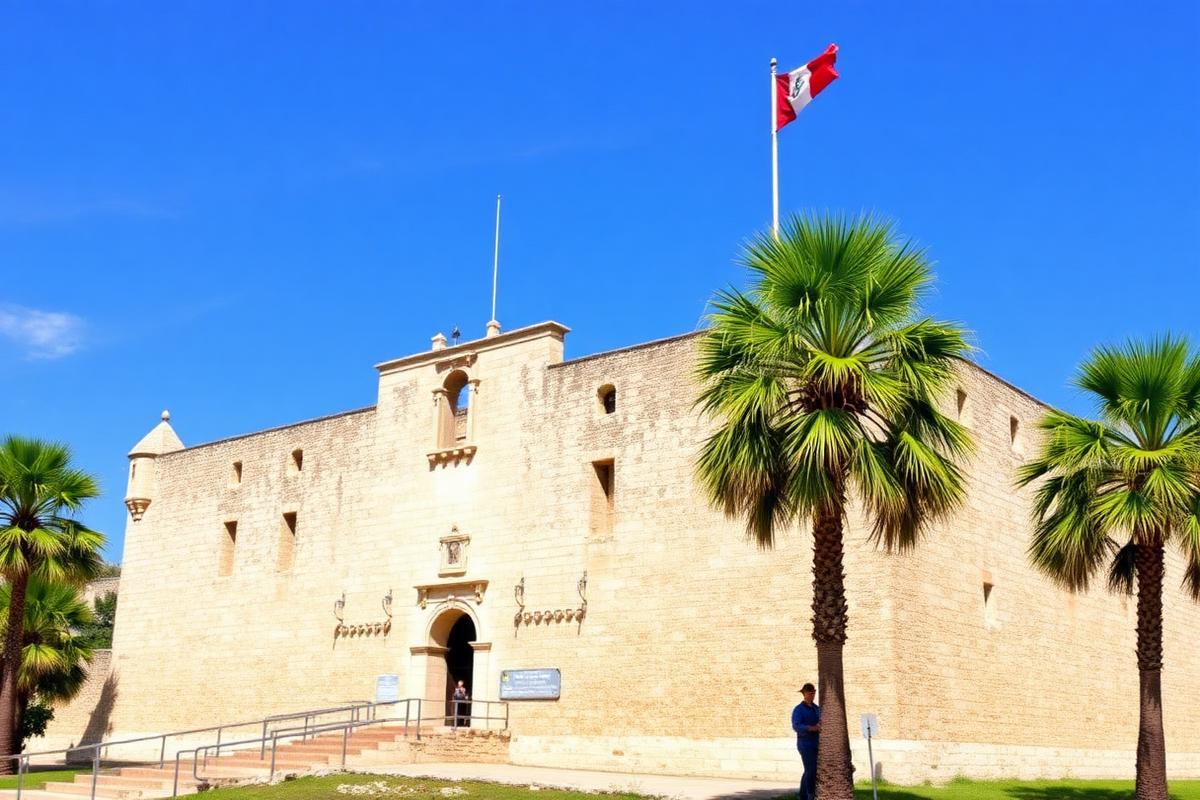
    Mission Nuestra Señora de la Purísima Concepción de Acuña, established in 1731 after being relocated from East Texas, stands as the best-preserved example of a Spanish colonial mission in Texas. Its church, consecrated in 1755, has never lost its roof and retains much of its original appearance, offering a striking visual of 18th-century architectural ambition. Unlike the Alamo, which has seen extensive reconstruction and repurposing, Concepción allows visitors to experience a structure largely as it stood centuries ago. Its twin bell towers and prominent dome, constructed from local limestone, are testament to the skill of its builders and the enduring quality of its design.

    Beyond its impressive facade, Concepción was a vibrant community. The church interior, though faded, once boasted colorful frescoes, fragments of which are still visible, depicting religious symbols and geometric patterns. These murals served both an aesthetic and didactic purpose, aiding in the instruction of indigenous converts. The mission quadrangle housed living quarters, workshops, and agricultural facilities, all enclosed within defensive walls. Concepción's survival in such an intact state provides invaluable insights into the daily life, religious practices, and architectural achievements of the Spanish colonial period, making it a cornerstone of the Mission Trail experience.

    Mission San José: The Queen of the Missions

    Mission San José y San Miguel de Aguayo, founded in 1720, quickly became the largest and most prosperous of the Texas missions, earning it the moniker 'Queen of the Missions.' Its impressive size and elaborate architecture reflect its success in attracting and integrating indigenous populations. The mission walls enclosed a vast complex that included a large church, granary, workshops, and hundreds of living quarters, providing a self-sufficient village for its residents. The church itself, completed in 1782, is renowned for its magnificent facade, intricate carvings, and the iconic 'Rose Window' (*Ventana de Rosa* or *Rosa's Window*), a stunning example of Baroque ornamentation attributed to Pedro Huízar.

    San José's prosperity was largely due to its advanced irrigation system, which drew water from the San Antonio River, enabling extensive agriculture. The mission also developed thriving cattle ranches and skilled craft industries, producing textiles, tools, and other goods. Its formidable defenses, including a fortified granary and a large perimeter wall, underscored its role as a protective haven for its inhabitants against Comanche and Apache raids. Today, visitors can explore the church, the granary, and reconstructed quarters, gaining a palpable sense of the bustling community that once thrived within its walls, representing the zenith of the mission system's aspirations.

    Mission San Juan: An Agricultural Powerhouse

    Mission San Juan Capistrano, relocated to its present site in 1731 from East Texas, distinguished itself primarily through its highly productive agricultural operations. Situated on fertile land along the San Antonio River, San Juan developed extensive fields that yielded abundant crops of corn, beans, squash, and cotton. This agricultural surplus not only sustained the mission community but also allowed for trade with other Spanish settlements and even some indigenous groups, contributing significantly to the regional economy. The mission's success in farming underscored the Spanish strategy of economic self-sufficiency as a means of establishing enduring colonial outposts.

    While its church, completed in 1772, is more modest in scale compared to San José or Concepción, San Juan's broader impact lay in its extensive farmlands and the community's industriousness. The remains of its historic acequia (irrigation ditch) system, which diverted river water to the fields, are still visible and partly operational today, highlighting the sophisticated engineering employed by the mission residents. Exploring San Juan offers a clear perspective on the practical, economic foundations of the mission system, demonstrating how these religious centers were also vital agricultural and trade hubs.

    Mission Espada: Enduring Ingenuity and Craftsmanship

    Mission San Francisco de la Espada, also relocated from East Texas in 1731, holds the distinction of having the only mission-era acequia system still in use in the United States. Its primary focus, like San Juan, was agricultural, but Espada is particularly noted for its unique architecture, including an espadaña (bell gable) that gives the mission its name, meaning 'sword.' The church, though partially reconstructed, reflects the mission's long history and the continuous efforts of its community. The most compelling aspect of Espada is its connection to the Espada Aqueduct, a marvel of 18th-century engineering that continues to deliver water across a creek to the mission's fields.

    Espada also fostered various crafts, including brick-making, a skill essential for construction and repairs. The original layout and much of the architectural fabric of Espada provide a direct link to the ingenuity and resourcefulness of its builders. The sustained use of its acequia and the aqueduct stands as a powerful testament to the enduring legacy of Spanish colonial engineering and the adaptation of indigenous labor. Visiting Espada not only reveals a mission structure but also a living, working piece of history, where ancient water systems still nourish the land.

    The Decline and Enduring Legacy

    By the late 18th and early 19th centuries, the Spanish mission system in Texas began a slow decline. Factors such as disease, dwindling indigenous populations due to intertribal conflict and European diseases, secularization policies by the Spanish crown, and growing friction between mission residents and encroaching settlers contributed to their eventual dissolution. The secularization process, which transferred mission lands and assets from ecclesiastical to civil control, effectively ended the mission era. Mission San Antonio de Valero (the Alamo) was secularized in 1793, followed by the other San Antonio missions in 1794. Its church eventually became a military outpost, setting the stage for its legendary role in 1836.

    Despite their formal dissolution, the San Antonio missions left an indelible mark on the region. They forged a new cultural identity, blending Spanish traditions, language, religion, and agricultural practices with indigenous ways of life. The missions are not merely historic buildings; they are foundational elements of San Antonio's heritage, representing a complex period of cultural exchange, conflict, and adaptation. Today, as a UNESCO World Heritage site, the San Antonio Missions National Historical Park preserves these sites, ensuring that their stories of evangelization, settlement, and the enduring spirit of human endeavor continue to resonate for generations to come, reminding us that San Antonio's history extends far beyond a single, iconic battle.

    Frequently Asked Questions

    When were the San Antonio missions established?+

    The missions were established between 1718 (Mission San Antonio de Valero/Alamo) and 1731 (Missions Concepción, San Juan, and Espada, after relocations from East Texas). Mission San José was founded in 1720.

    What was the primary purpose of the Spanish missions in Texas?+

    The primary purpose was to evangelize indigenous populations, convert them to Catholicism, and civilize them according to Spanish norms, while also serving as outposts to secure the Spanish frontier and establish agricultural communities.

    Are all five San Antonio missions part of the UNESCO World Heritage site?+

    Yes, all five missions – Mission Valero (the Alamo), Mission Concepción, Mission San José, Mission San Juan, and Mission Espada – are collectively recognized as a UNESCO World Heritage site, designated in 2015.

    Are the missions still active churches today?+

    Yes, all four missions within the San Antonio Missions National Historical Park (Concepción, San José, San Juan, and Espada) are still active Catholic parishes, holding regular services. The Alamo is no longer an active church but is preserved as a historic site.

    What is an acequia and why was it important for the missions?+

    An acequia is an irrigation ditch or canal system used to divert water from a river or stream to agricultural fields. It was crucial for the San Antonio missions to sustain their crops and livestock, allowing them to establish self-sufficient farming communities in the semi-arid region.

    Sources & Further Reading

    Spotted an error? See our corrections policy. Curious about our research? Read our editorial policy and sources.